Naval News – RFA Tidespring commissioned

RFA Tidespring

Britain’s Royal Fleet Auxilary (RFA) welcomed RFA Tidespring (A136) to the Fleet on Monday 27 November 2017.

Built in South Korea by Daewoo, the new 37,000 tonne ship, one of the four biggest tankers to be purpose built for the RFA, will provide fuel, food and stores for Royal Navy warships all around the world.

She is the first of class of the Military Afloat Reach & Sustainability (MARS) Tankers and together with her three sister ships Tiderace, Tidesurge and Tideforce, are flexible, state-of-the-art double hulled vessels, which will provide key future support to the Queen Elizabeth Class Aircraft Carriers.

RFA Tidespring Ships Crest

The last RFA ship to bear the same name was RFA Tidespring (A75) in service from 1963 to 1991. Tidespring took part in the Falklands War, particularly in the recapture of South Georgia.

You can find out more here:

https://www.royalnavy.mod.uk/news-and-latest-activity/news/2017/november/27/171127-rfa-tidespring

https://www.royalnavy.mod.uk/our-organisation/the-fighting-arms/royal-fleet-auxiliary/tankers/rfa-tidespring


Naval News – Australia names new RAN Replenishment Ships

The Spanish Replenishment Oiler ESPS Cantabria leads Division five into Sydney Harbour for the International Fleet Review 2013.jpg

The Australian Minister for Defence, Marise Payne has announced the names of the two new Support Ships that will be built by Navantia based on the SPS Cantabria (A15) Auxiliary Oiler Replenishment (AOR) currently in service with the Spanish Navy.

They are:

HMAS Supply

HMAS Supply Ships Crest

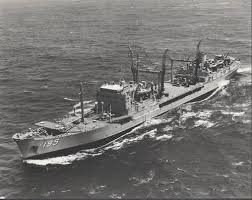
The last RAN ship of that name was a Tide-class Fleet Tanker (AO 195) in RAN service from 1962 until 1985.

HMAS Supply AO195

HMAS Stalwart

HMAS Stalwart Ships Crest

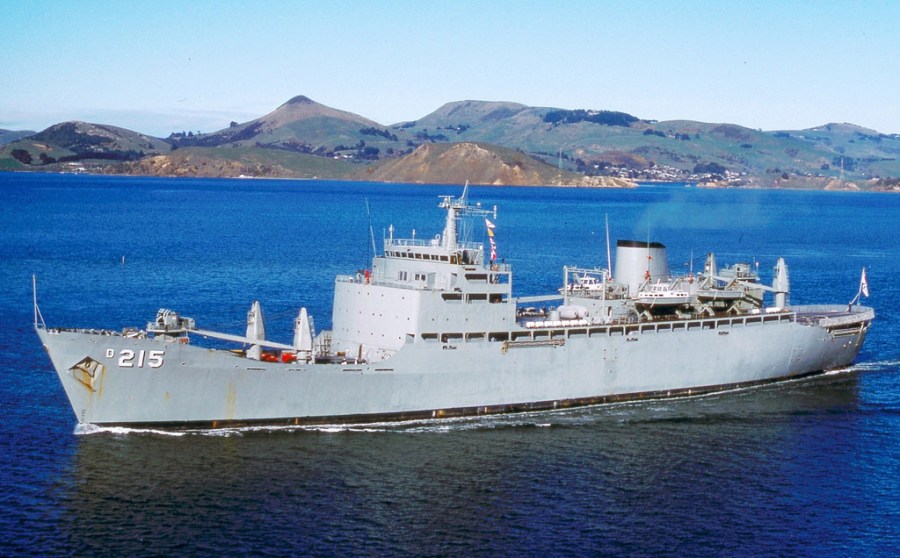
The last RAN ship of that name was a Destroyer Tender (D215) in RAN service from 1968 until 1990.

HMAS Stalwart D215

Both ships should enter service from 2020 and reach Full Operating Capability (FOC) by 2022. They replace the existing HMAS Success (OR304), which has been in service since 1986, and HMAS Sirius (O266) which is a converted commercial tanker in service since 2006.


Great Battles – ‘I died in hell – (They called it Passchendaele)’* – The Centenary of the Third Battle of Ypres

Friday 10 November 2017 marks the centenary of the end of the Third Battle of Ypres, more commonly referred to as ‘Passchendaele’.

The Third Battle of Ypres was the major British offensive in Flanders in 1917. It was planned to break through the strongly fortified and in-depth German defences enclosing the Ypres salient, a protruding bulge in the British front line, with the intention of sweeping through to the German submarine bases on the Belgian coast. The battle comprised of a series of limited and costly offensives, often undertaken in the most difficult of waterlogged conditions – a consequence of frequent periods of rain and the destruction of the Flanders’ lowlands drainage systems by intense artillery bombardment. As the opportunity for breakthrough receded, Sir Douglas Haig still saw virtue in maintaining the offensives, hoping in the process to drain German manpower through attrition. The main battles associated with Third Battle of Ypres were:

– Pilckem, 31 July to 2 August
– Langemarck, 16-18 August
– Menin Road, 20-25 September
– Polygon Wood, 26 September to 3 October
– Broodseinde, 4 October
– Poelcapelle, 9 October
– Passchendaele (First Battle), 12 October
– Passchendaele (Second Battle), 26 October to 10 November.

Australian Divisions participated in the battles of Menin Road, Polygon Wood, Broodseinde, Poelcapelle and the First Battle of Passchendaele. In eight weeks of fighting Australian forces incurred 38,000 casualties. The combined total of British and Dominion casualties has been estimated at 310,000 (estimated German losses were slightly lower) and no breakthrough was achieved. The costly offensives, ending with the capture of Passchendaele village, merely widened the Ypres salient by a few kilometres.

* Taken from Siegfried Sassoon’s poem ‘Memorial Tablet’ written by him in October 1918 and first published the following year.


War Poetry – ‘Dulce et Decorum Est’* (Wilfred Owen)

Wilfed Owen

“Bent double, like old beggars under sacks,

Knock-kneed, coughing like hags, we cursed through sludge,

Till on the haunting flares we turned our backs,

And towards our distant rest began to trudge.

Men marched asleep. Many had lost their boots,

But limped on, blood-shod. All went lame; all blind;

Drunk with fatigue; deaf even to the hoots

Of gas-shells dropping softly behind.


Gas! GAS! Quick, boys!—An ecstasy of fumbling

Fitting the clumsy helmets just in time,

But someone still was yelling out and stumbling

And flound’ring like a man in fire or lime.—

Dim through the misty panes and thick green light,

As under a green sea, I saw him drowning.


In all my dreams before my helpless sight,

He plunges at me, guttering, choking, drowning.


If in some smothering dreams, you too could pace

Behind the wagon that we flung him in,

And watch the white eyes writhing in his face,

His hanging face, like a devil’s sick of sin;

If you could hear, at every jolt, the blood

Come gargling from the froth-corrupted lungs,

Obscene as cancer, bitter as the cud

Of vile, incurable sores on innocent tongues,—

My friend, you would not tell with such high zest

To children ardent for some desperate glory,

The old Lie: Dulce et decorum est 

Pro patria mori.”

* Latin phrase is from the Roman poet Horace meaning “it is sweet and fitting to die for one’s country”.

Wilfred Owen’s poem was published posthumously in 1920, two years after he was Killed in Action in Northern France, one week before the Armistice in November 1918.

Air Force News – Battle Honours awarded to Royal Air Force (RAF) Squadrons for operations in Iraq and Libya

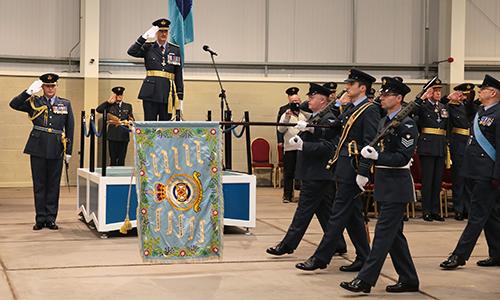
II AC Sqn Standard.jpg

The UK Ministry of Defence announced on 11 October 2017 that Her Majesty The Queen has approved the award of Battle Honours to squadrons of the Royal Air Force.

The Battle Honour “IRAQ 2003-2011” was approved for 27 operational flying squadrons and eight Royal Air Force Regiment squadrons for their service during Operation TELIC in Iraq. Those with the right to emblazon the Battle Honour on their Standard are:

  • No 7 Squadron RAF
  • No XXIV Squadron RAF
  • No 33 Squadron RAF
  • No 47 Squadron RAF
  • No 230 Squadron RAF
  • No 1 Squadron RAF Regiment
  • No 26 Squadron RAF Regiment
  • No 34 Squadron RAF Regiment.

For Operation DEFERENCE and Operation ELLAMY in Libya, the Battle Honour “LIBYA 2011” was approved for 13 operational flying squadrons. Those with the right to emblazon the Battle Honour on their Standard are:

  • No II (Army Cooperation) Squadron RAF
  • No IX (Bomber) Squadron RAF
  • No 47 Squadron RAF.

Hello!

Hi everyone and welcome to the ‘Wartime’ blog.

I created this blog to share what I have learnt about military history over the last 20 years, through personal interest and serving in both the Australian and British Armies. I have a broad range of topics which I will share with you throughout the year on ANZAC, British, Canadian and US military history, customs and traditions, news and events.

Stay  tuned for more soon…